The Vlagos are a Race in Breath of Life that were directly inspired by a creature from Balkan mythology, the Psoglav (Firsthand accounts claim that this can be pronounced ‘csoglav,’ which is close to ‘tsoglav’). Discussing this creature without mentioning it’s real-world counterpart seems disingenuous at best and disrespectful at worst. So I’ll share what I know.
There are many writers of fantasy and even science fiction that draw inspiration from the cultures and folklore of other groups. For some it is controversial, but I believe that the only controversy is when writers take these concepts without looking into the history or culture surrounding them. If you’re going to take inspiration from something, my biggest recommendation is to try and reach out to people. Many people like to talk about these things. Open ears lead to open hearts, and hopefully that makes the world a little bit friendlier.
The Psoglav
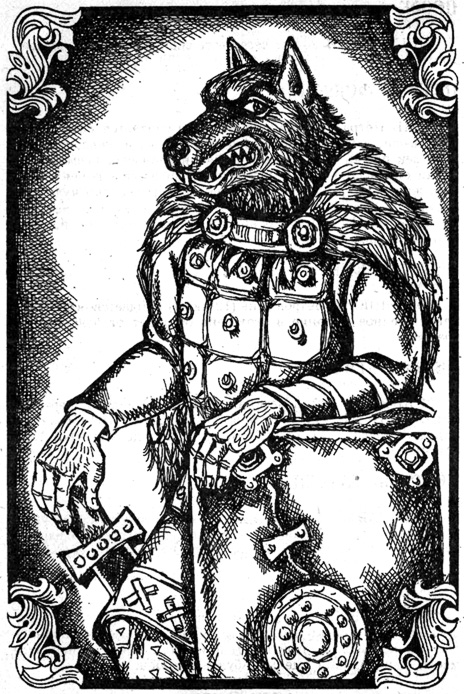
The Psoglav barely has a presence on Wikipedia, with it’s description only being one or two paragraphs long. There is media that depicts them, but most of it never reached the west. I have found some writers who mention the Psoglav, but this is rare.
From Wikipedia:
Psoglav (Serbian Cyrillic: Псоглав, literally “doghead“) is a demonic mythical creature in Balkan mythology; belief about it existed in parts of Bosnia and Montenegro.[1] Psoglav was described as having a human body with horse legs, a dog’s head with iron teeth, and a single eye on the forehead.[1]
Psoglavs were described as living in caves or in a dark land which has plenty of gemstones, but no sun.[1] They practice anthropophagy, by eating people, or even digging out corpses from graves to eat them.[1] In Croatian the term is psoglavac, and in Slovene it is psoglavec. There are numerous legends about them, particularly on the Istrian peninsula in Croatia.
The Psoglav is present in other works of fiction, but when I was working on Breath of Life I did try to stay close to source material so I had an understanding of the original mythology. One of the examples available to me was The Dark Realm by Vuk Stefanović Karadžić. The only piece of this work I can find that exists in English is in Wikisource, translated by Nikola Smolenski ten years ago.
The Vlagos
Now, if you were here for a short post, please be aware that I am about to introduce you to one of the most thought-out races in the entire series. I won’t go into an excessive amount of detail, just enough to establish an understanding of my world building philosophy.
The name ‘Vlagos’ is a change I made to avoid association with the Psoglav. Why? I do not want a reader to associate the Psoglav purely with my work. The Vlagos are similar to the Psoglav, but the differences made me feel that separation was necessary.
Physiology
Vlagos match the description of the Psoglav in that they have a human body, with the legs of a horse, the head of a dog, and a single eye. They also have iron teeth. Because they share the traits of Horses, Dogs, and Humans, I can see them behaving similarly. Social bonds may be prominent, a sort of herd/pack mentality that evolved along with them.
Due to lack of sunlight in the caves, it’s highly likely their eyes have a pink color, much like other subterranean species do. This may also leave them extremely vulnerable to the sunlight above, resulting in them having to wear specialized visors when traveling in daylight. It is possible that with enough surface generations, the Vlagos may one day walk the surface with uncovered eyes.
Vlagos are likely opportunistic omnivores, meaning they would eat whatever is available to them at any given time. Raccoons and bears are a good example of this. Their iron teeth would be strong and acid-resistant, and their canine heads would mean their bite force is much stronger than that of a human.
Hoof care is something that is common for the Vlagos, and while their society may include farriers of some kind, it’s likely the cave provides natural wear on them. It’s possible they would only need to wear horseshoes outside of the caves, in environments they are not acclimated to.
Vlagos are troglophiles, meaning that they are able to leave the caves in search of food, usually at night with the help of their visors. They are not limited to the dark zones of caves, and this is why they are able to coexist with humans.
Location
Vlagos live in large cities and villages beneath the ground, with the largest being Bezgrun. Some have immigrated to human settlements above ground, working at night with visors that protect them from the light of the sun.
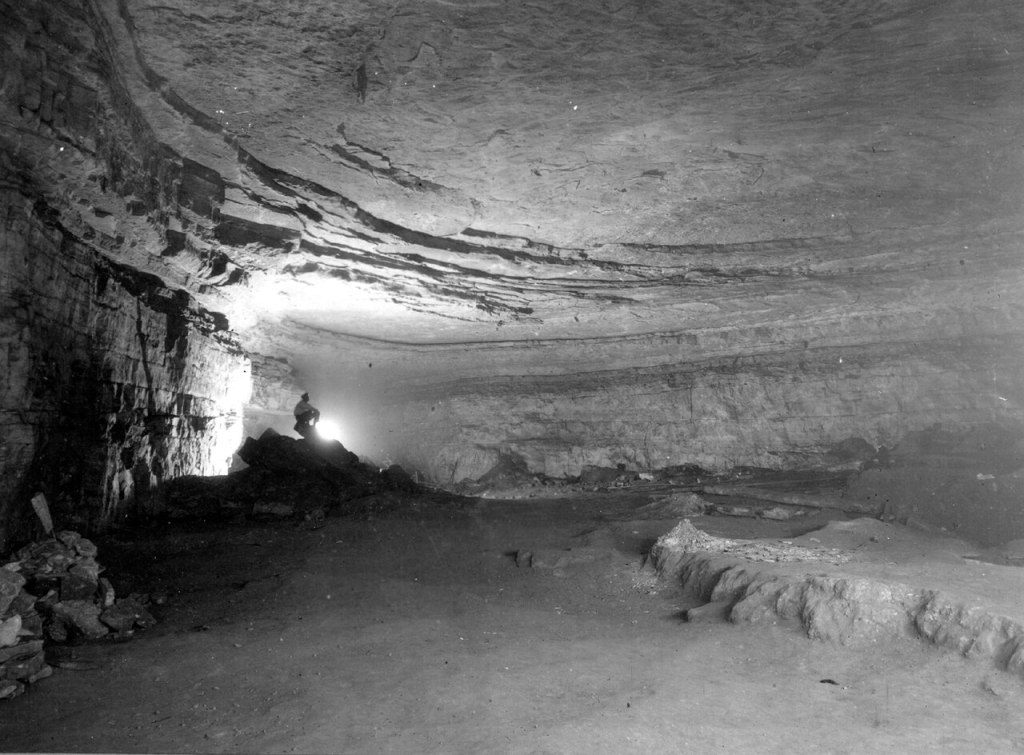
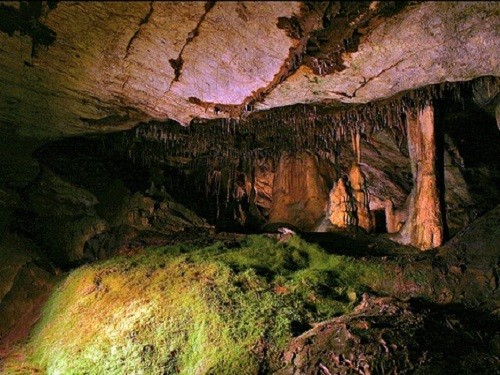
The inspiration for their cave homes came from two notable locations; Mammoth Cave in Kentucky, USA, and Ceremošnja Pecina Cave, in the Homolje mountains of Eastern Serbia.
Both caves have interesting ecologies, with flowing water in some locations. Moss, bats, and life of all kinds thrive here, and in ways that appear to be impossible. This inspired the Vlagos’ natural perseverance.
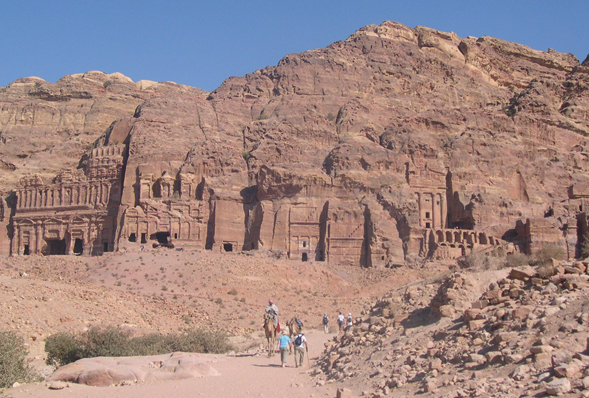
Bezgrun is carved into the cave walls, forming a city overtime. This idea was inspired by carved cities like Petra, in what is now Jordan.
Culture
Cultures are heavily influenced by all aspects of life. Family, community, environment, technology, and more.
The Vlagos are unique in that they are a society that grew in darkness, yet they crave unity. Families are very tightly-knit, communities are built on mutual trust and honor. The cave environment makes living harder, yet that only makes their relationships stronger. Teamwork builds villages and cities; it keeps the Vlagos alive.
The caves Vlagos lived in bore treasures like metal and precious gemstones. These became integral to Vlagos art and religion. Their metallurgy became some of the best in the world, with Vlagos smiths becoming prized for their work on the surface. Due to their architecture, Vlagos also made excellent brick layers and masons.
Food would be influenced by whatever is available. Clean cave water, mushrooms, bats, and spiders may comprise their diets. Soups, roasts, and other meals may be created by these. One example that exists in Bjornborn is Spnyak, a soup that uses a mushroom-based broth and spider meat.
“Miloš appeared excited as the [Vlagos] turned into his cart, reaching for stone-carved bowls bearing swirls of chalky white and gray. He filled one, chunks of mushroom and meat falling into the bowl with a cascade of broth. Miloš could hardly sit still when the bowl reached him. A plate with two black stalks was slid next to him, then a spoon.” -Breath of Life: Bjornborn
The Vlagos are proud artisans who prioritize unity and treat others with care. However, if taken advantage of, they can become formidable adversaries. They are seen with distrust among some humans due to religious differences.
Religion
The Vlagos have developed religion that is not Anlunic. In Breath of Life, Anlun was a man who slayed a great dragon and brought peace to Talira. His story influenced the world and created a religion that is followed by millions of people. Those followers practice Anlunic Religions.
The Vlagos do not believe in gods. They believe that caves are living beings capable of thought. Vlagos priests will often make pilgrimage to the deepest, darkest parts of the cave, and sit in silence until they hear the ‘stone-song.’ This is likely a phenomena called the Ganzfeld Effect, a type of sensory deprivation that can cause hallucinations. The patterns that appear in the hallucinations are seen in Vlagos art, which they believe to be visions the cave has given them. ‘Voices’ heard in these hallucinations influenced Vlagos language.
The stone priests are highly regarded and are treated as leaders, which would make the Vlagos part of a theocracy. Leaders of the Anlunic faiths consider this heretical, and will openly reject these practices, calling them demonic.
In Conclusion
The Vlagos are their own people. They have culture, food, art, religion, and family. They have personalities, they have unique interests and hobbies, they are a living race alongside humans. Because of these dramatic changes, the Vlagos had shifted from their Psoglav inspiration into something transformative.
I hope that this post acts as an interesting read, as well as a lesson for other world building writers in what may be possible in their worlds. Research your topics, expand on them, and you may end up with something far deeper than you anticipated.
Stay tuned on social media platforms for updates on Bjornborn and the Breath of Life Series as a whole. I will try to update regularly. Suggestions on what I should discuss next are welcome!
 Danae Bradley
Leave a comment